
Beyond the Field Marks
The story of a confusing meadowlark and how to identify them!

Birds are picky about their ranges and they tend to draw their lines. Eastern vs the Western species. A class example of that in the United States being the Eastern Meadowlark (EAME) and the Western Meadowlark (WEME). Meadowlarks are songbirds in the family Icteridae or the Blackbirds of the new world. So far 8 species of Meadowlarks have been known to science, divided between two genus 1) Sturnella 2) Leistes. If you haven’t heard about them, you will definitely like this next part. The Sturnella species are yellow breasted species whereas the south american counterparts or the Leistes are red breasted species of meadowlark.
Yellow breasted Meadowlarks
Eastern meadowlark (Sturnella magna)
Chihuahuan meadowlark (Sturnella lilianae)
Western meadowlark (Sturnella neglecta)
Red breasted Meadowlarks
Red-breasted meadowlark (Leistes militaris)
White-browed meadowlark (Leistes superciliaris)
Peruvian meadowlark (Leistes bellicosus)
Pampas meadowlark (Leistes defilippii)
Long-tailed meadowlark (Leistes loyca)
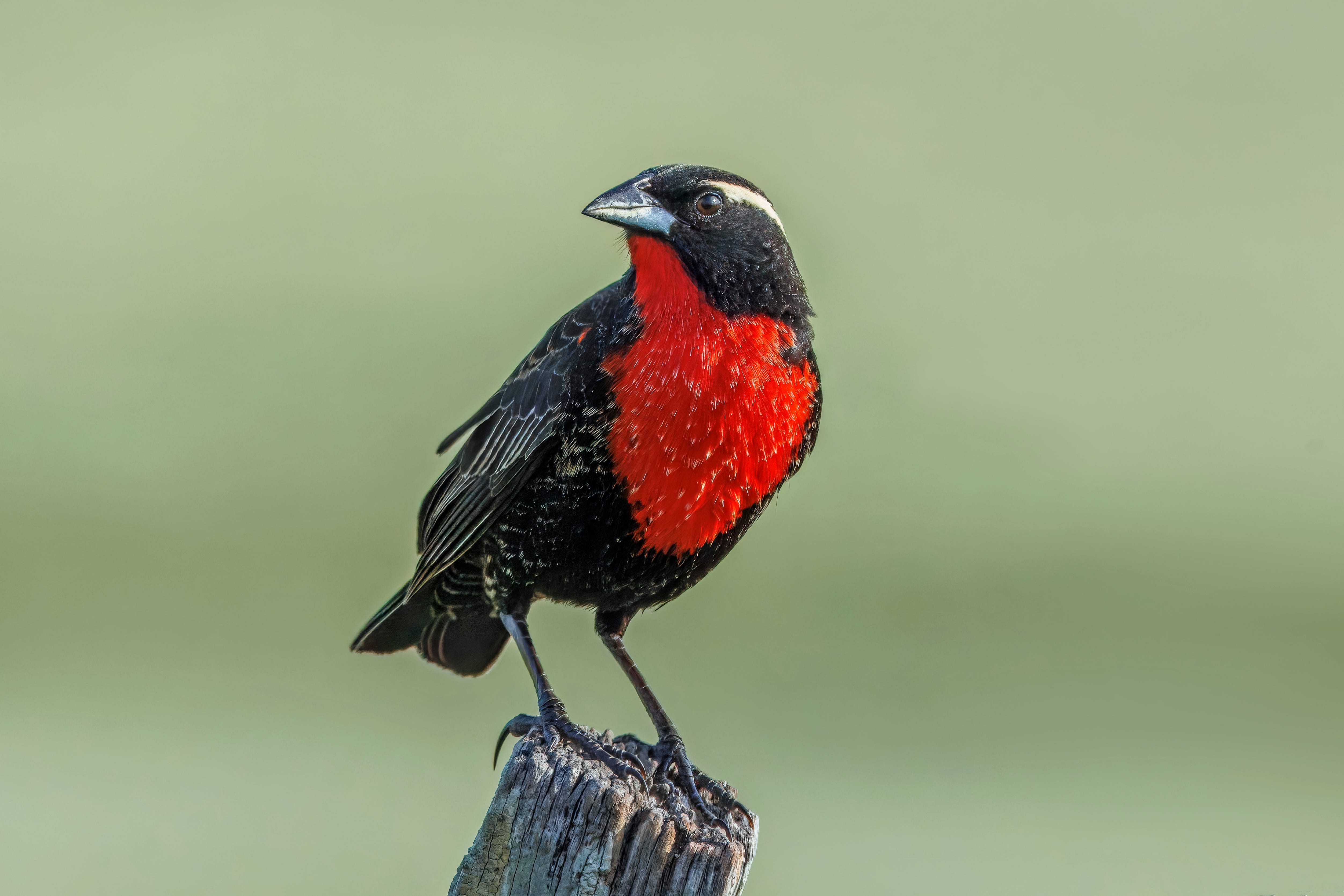
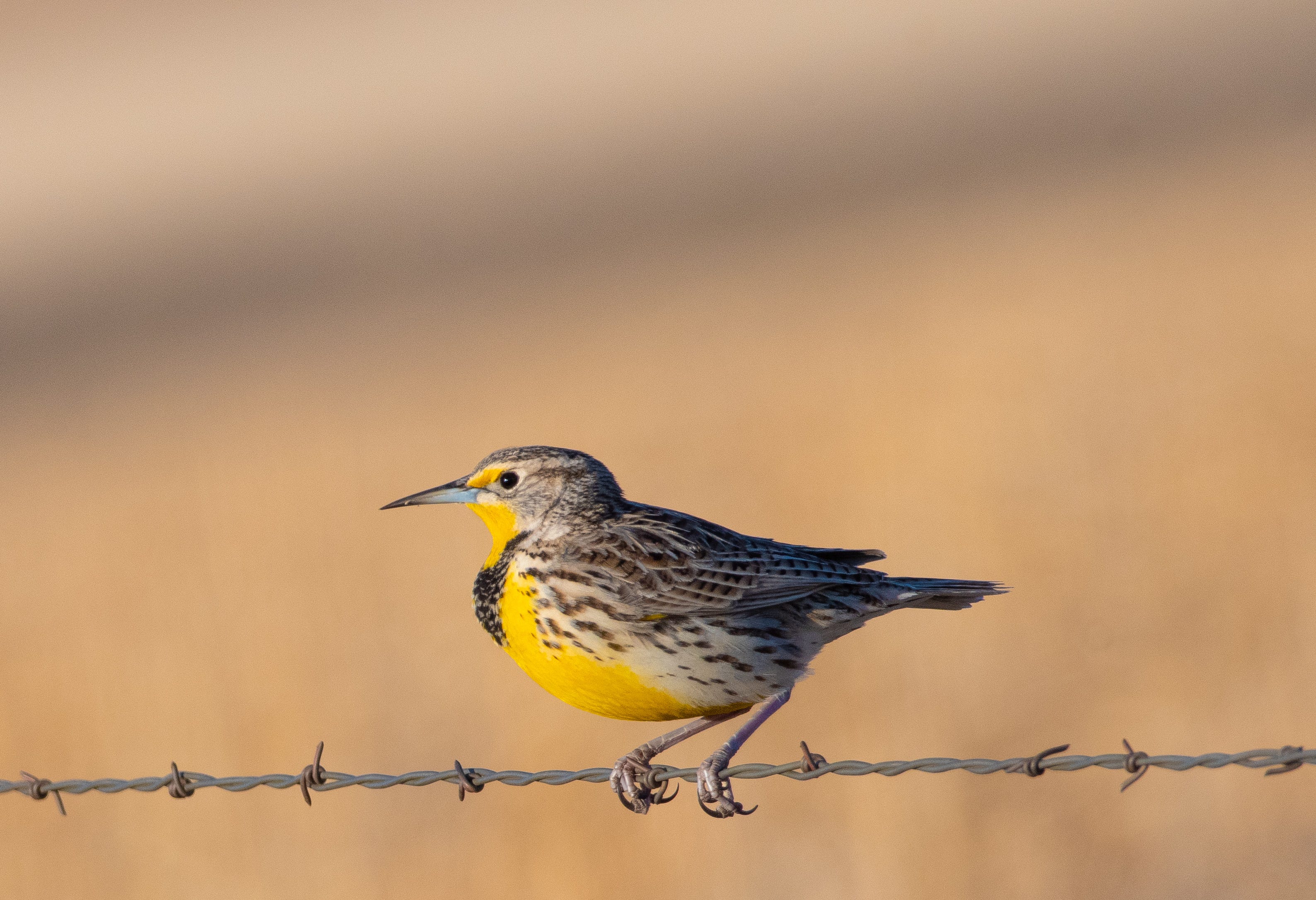
You might be thinking oh well, those look very easy to identify, and they kind of are, except for the EAME and WEME. As the name suggests EAME and WEME are found in each half if the state, having said that they do overlap in various states almost along the mid continental line (If that’s what it is called). For our area, Fargo and west of here EAME are hard to get, however, you drive east for a while and they start popping up.
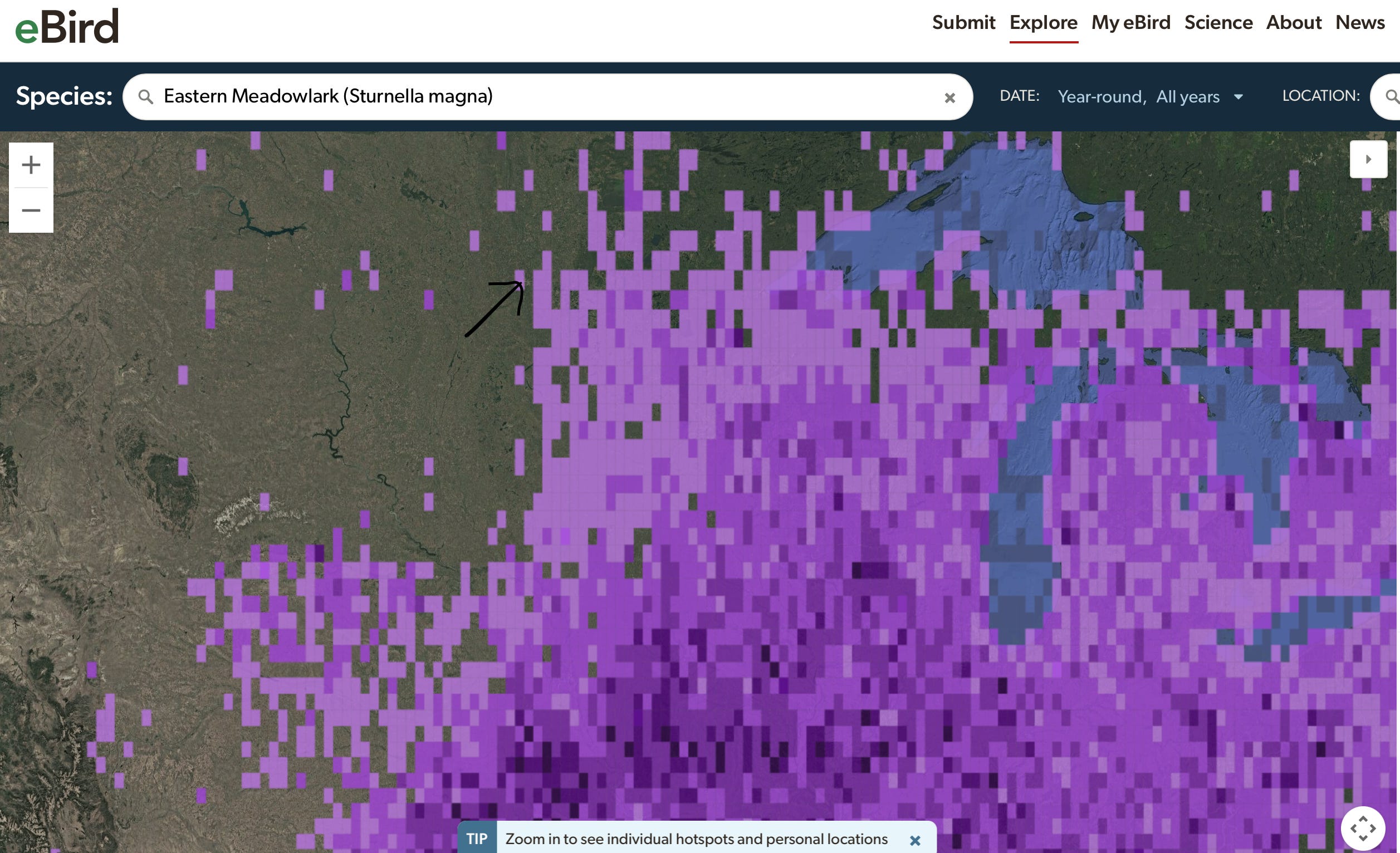
I still need that bird for the county and this past May one was reported by a long time veteran birder in our county Keith. So we went there listened to hit, heard the odd sounding song and reported the bird on eBird. A week or so later, we got email from the “eBird cops” as you might have heard on the famous birding documentary “Listers”. It was supposedly a hybird. Few of the other long term and veteran birders in the state got a good look at the bird and got photos and were able to say that it looked better for a hybrid rather than a EAME. That was it. I lost my county bird # 283!
This past week Keith heard another meadowlark that definitely sounded a lot different. So, we decided to meet Sunday morning and have multiple ears, multiple eyes and multiple lens pointed at it. As soon as I got to the parking lot that we were supposed to meet in, Keith told me that the bird was singing behind us. A different location from where he had heard the bird first. I recorded the bird on my phone as soon as I heard the weird sounding meadowlark. I tried Merlin but Merlin was indecisive, probably because of the location. When Trebor showed up, we started walking towards the area where the song was coming from. The bird was singing from top of a tree. However, as we got closer to it, it flew. As a bird usually does. But, unlike what a bird you’re usually chasing does, this bird did something different, something weird and new, it landed almost in front of us. I managed to get a few shots before it flushed. I had decent shots to see the ‘malar’ area/region which is something that could be used to "‘identify’ the eastern and the western species.1
So what’s the deal with the malar region then? Let’s look at some photos!
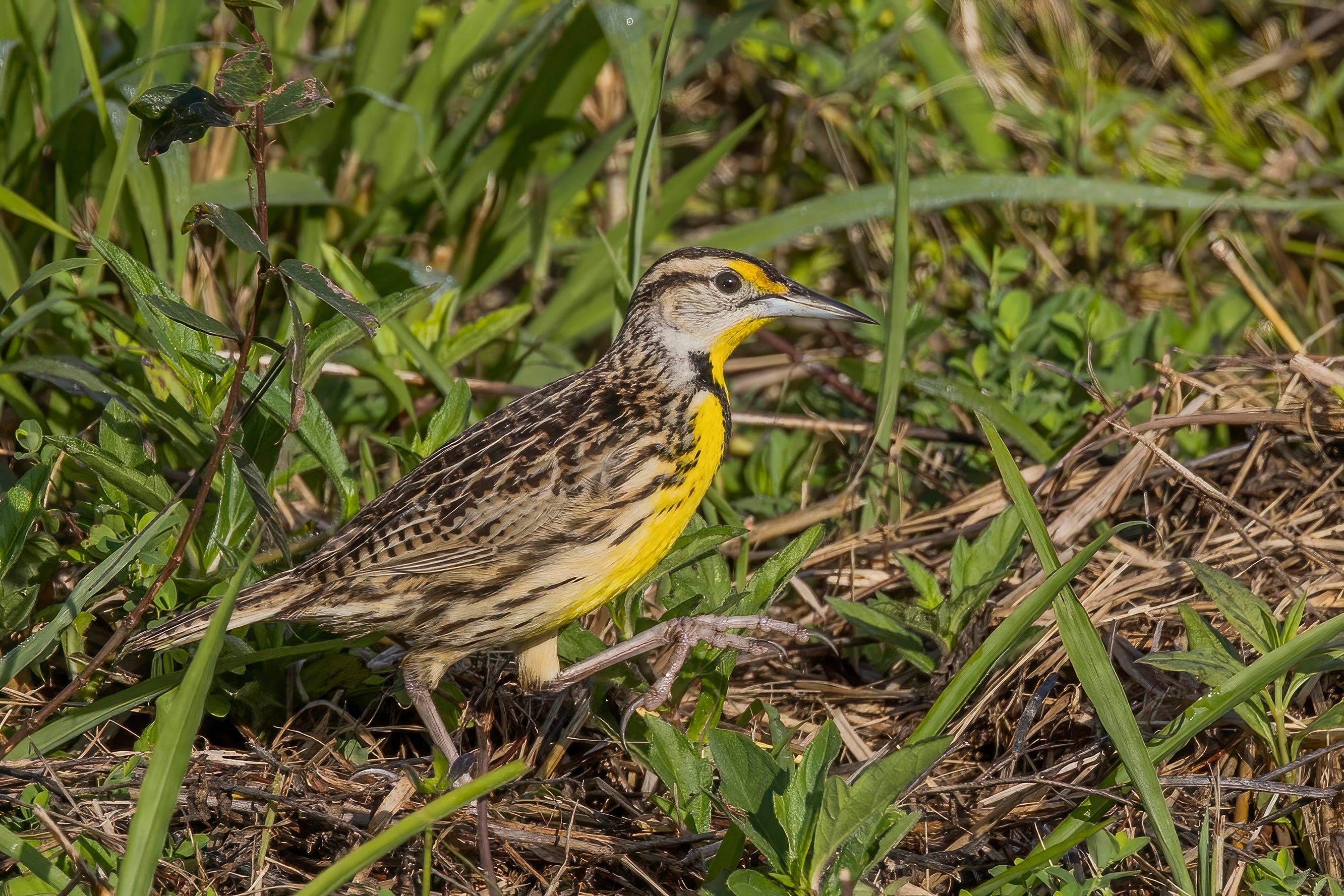
If you look at the lower mandible on this bird you can see that the area behind base of the lower mandible has no yellow or the whole malar is mostly white. To compare that with a WEME let’s look at the photo below. See how that base of the bill is followed by yellow? almost all of it? That apparently is one of the ‘visual’ or ‘morphological’ differences between the two species.
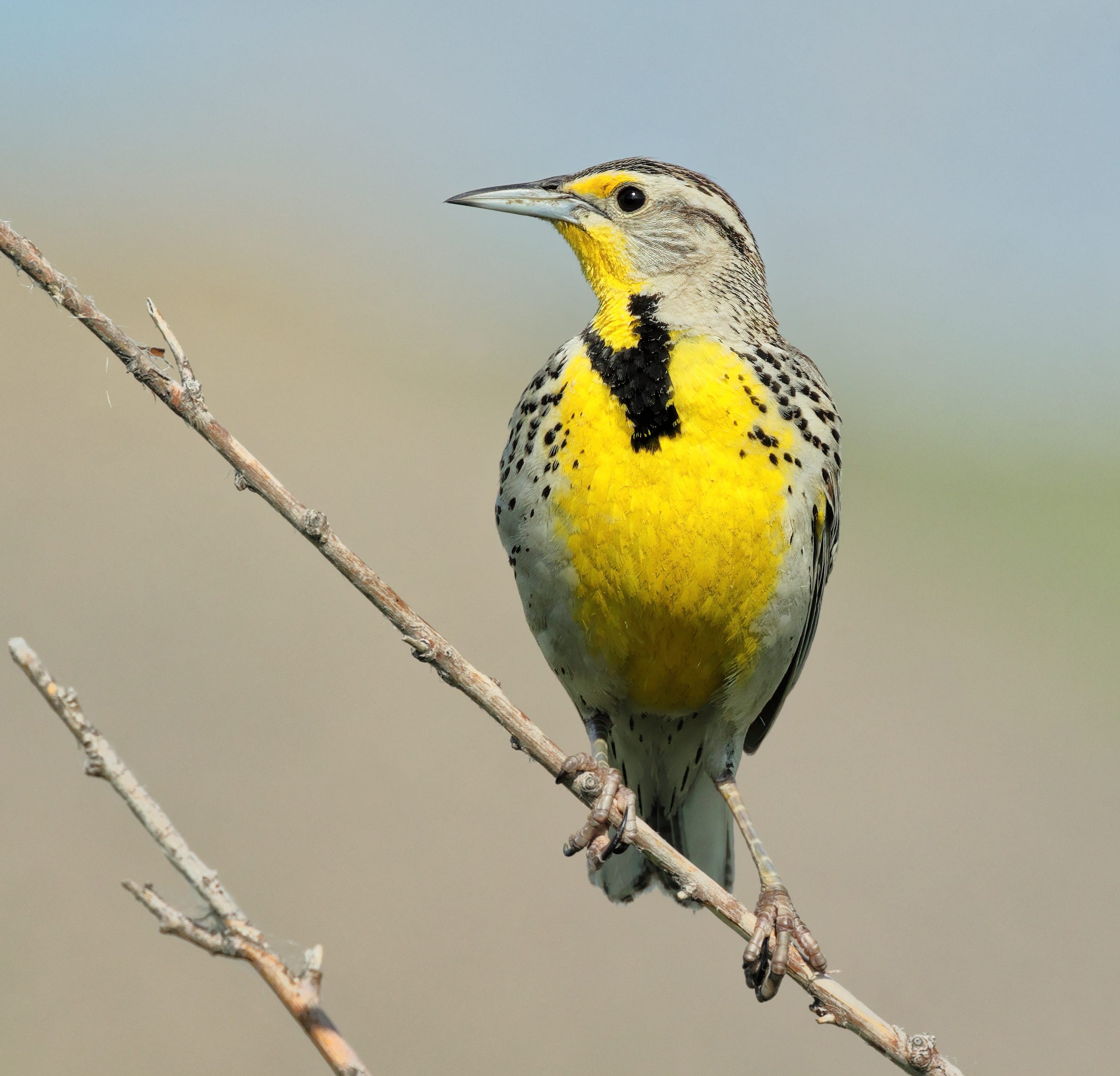
However, as always, there’s always an exception and looks like there is one in this case as well. So basically, this might not be the best thing to use while identifying the species, relying on the song would be the best option or ranges. For more on the variation in the malar region refere to : Cornell Lab Blog
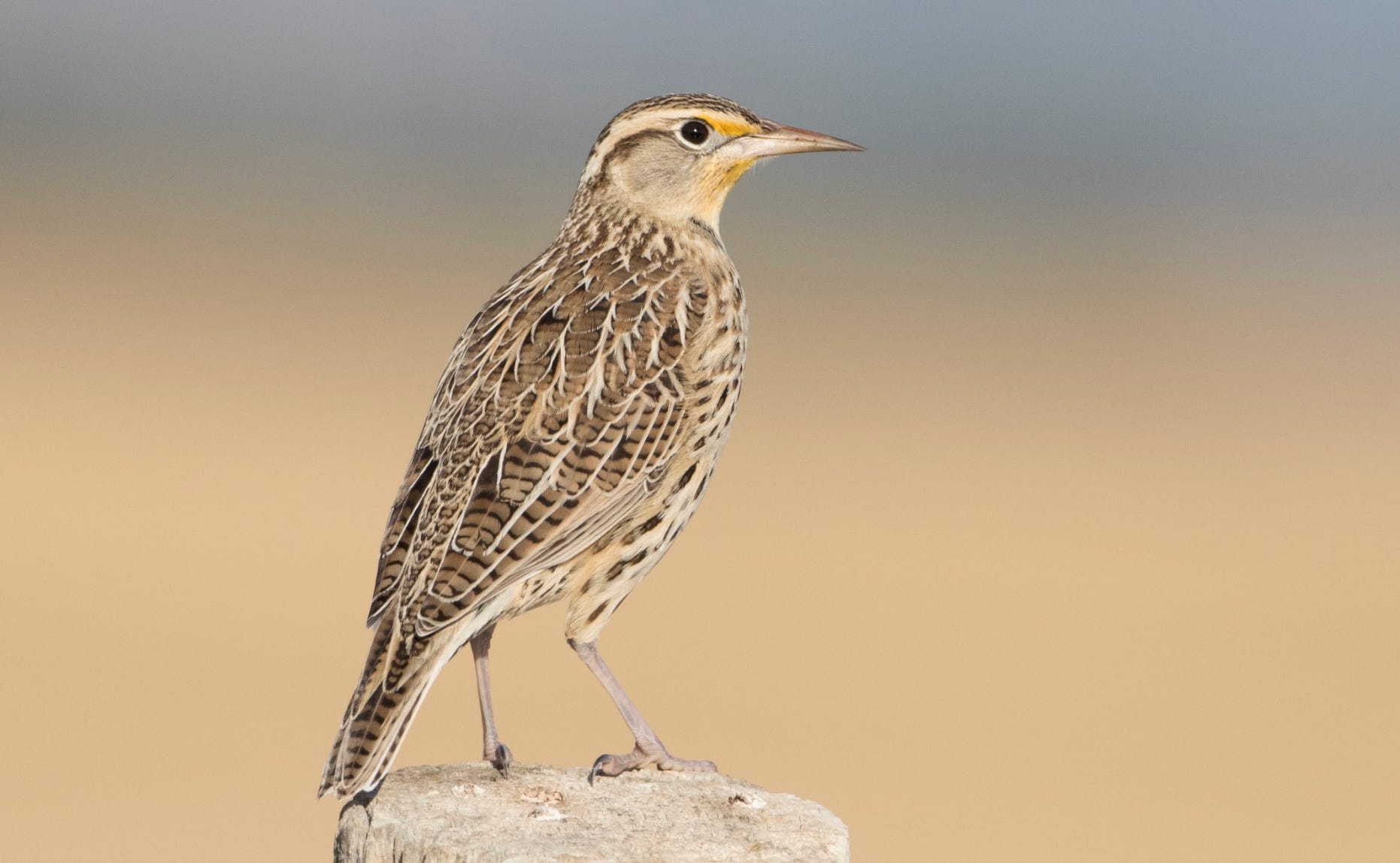
Wait, it’s not done yet. Looks like there are other traits you could look for, again, with caution. The central tail feathers of EAME seems to look more darker along the center and has thicker bands compared to the WEME. For reference look at the photo below. The horizontal tail bands on WEME seem to be thinner compared to EAME. Also a good thing to note is the darker coloration in the back region of EAME compared to WEME (again, seems to vary a lot, but EAME is supposed to be darker looking than WEME). Compare the whiteness or the clear white malar in the two photos below. And based on all the photos that I have gone through trying to figure out our species, EAME seems to have a tinge of rufous in the back.
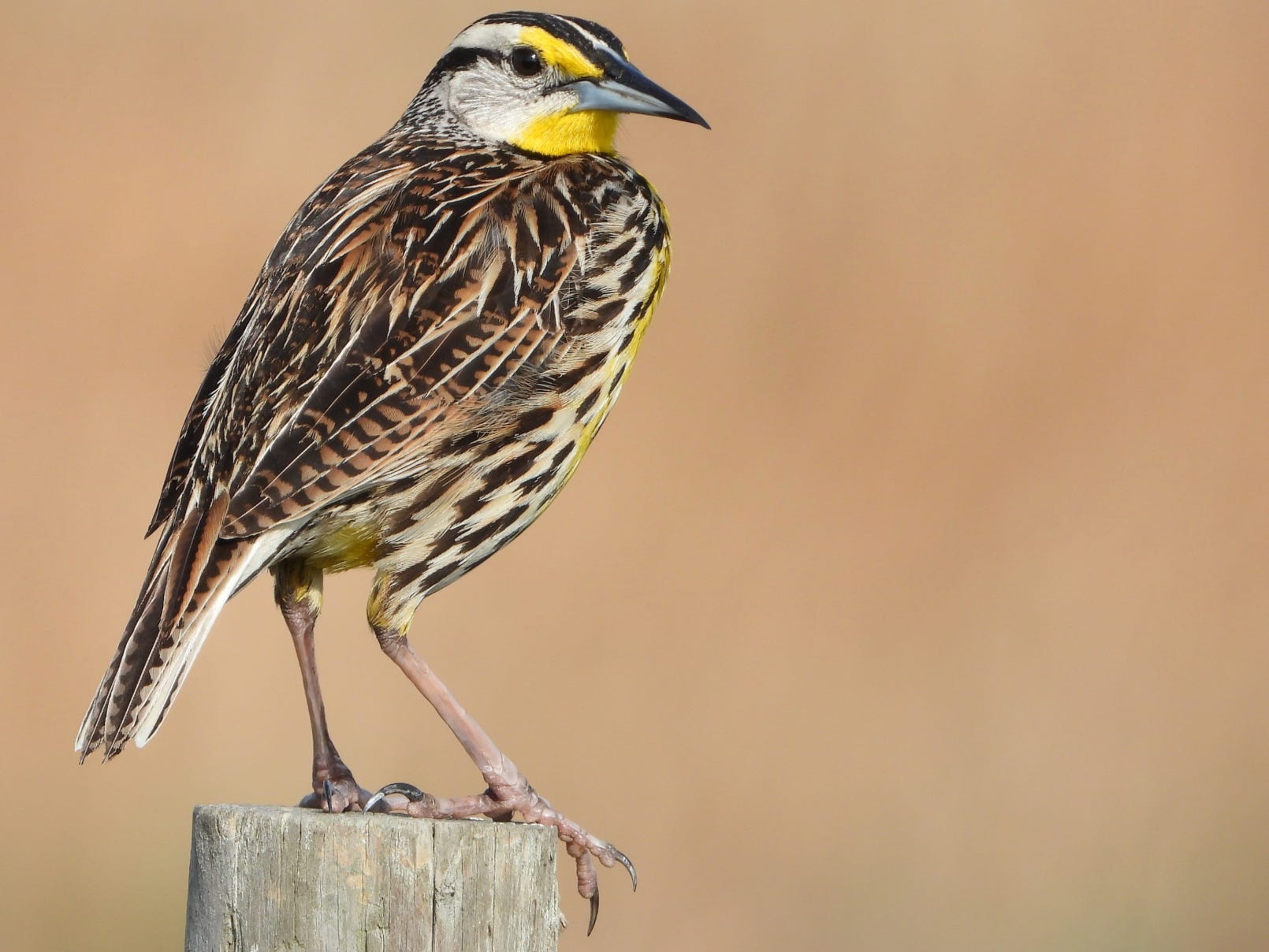
Another fieldmark that has been mentioned a lot is the number of white tail feathers or retrices, apparently, EAME has 3 (or more rare) retrices whereas WEME has 2.5 or 2. But again this seems to vary a lot between individuals.
The nail in the coffin (or the nest box?)
No field mark is better than songs or calls to identify these two species. Or is it? We will get to that later. But, it does seem to work most of the time. So listen to the variation in songs and calls between these two species. Specially the call seems to be a dead giveaway. The call sounds throaty pluk or chupp in WEME whereas in EAME its a buzzy dzzhrrt or dzert.
WEME song: Audio credit: Ron Overholtz (Xeno-canto)
WEME call: Audio credit:
EAME song: Audio credit: Manuel Grosselet-Edgar del valle-Rebeca Martinez (Xeno-canto)
Call of EAME: Audio credit: Thomas Magarian (Xeno-canto)
Now, moving on to the interesting part. Here is the song that we heard. And the interesting and kind of a sad thing is we heard the bird make a EAME call, but nobody had their phones up for recording it.
And if you look at both of these photos that I took, you can easily see that there is some overlap of the yellow in the malar region. And, also that the tail has thinner band than we would expect in a EAME.
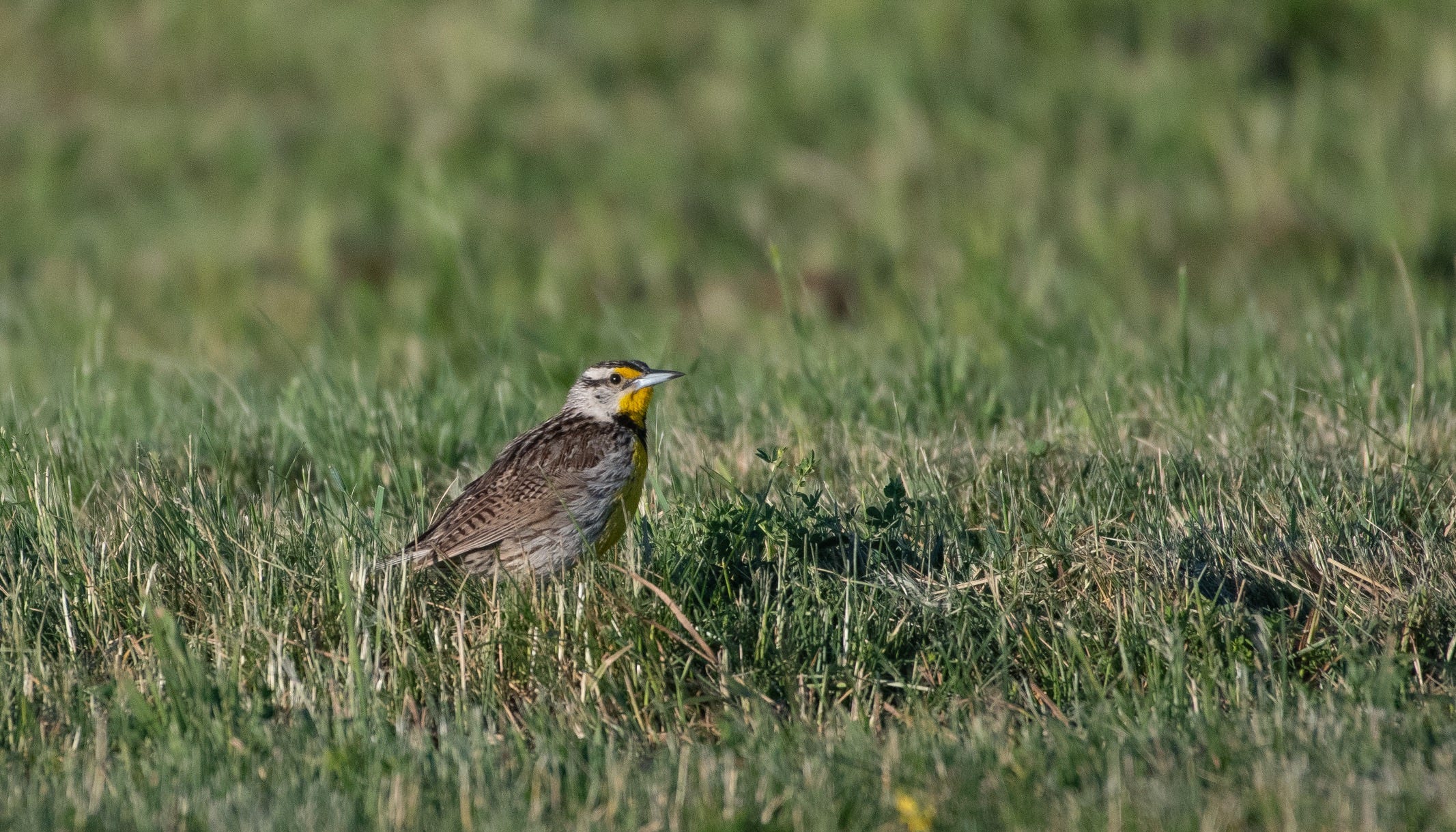
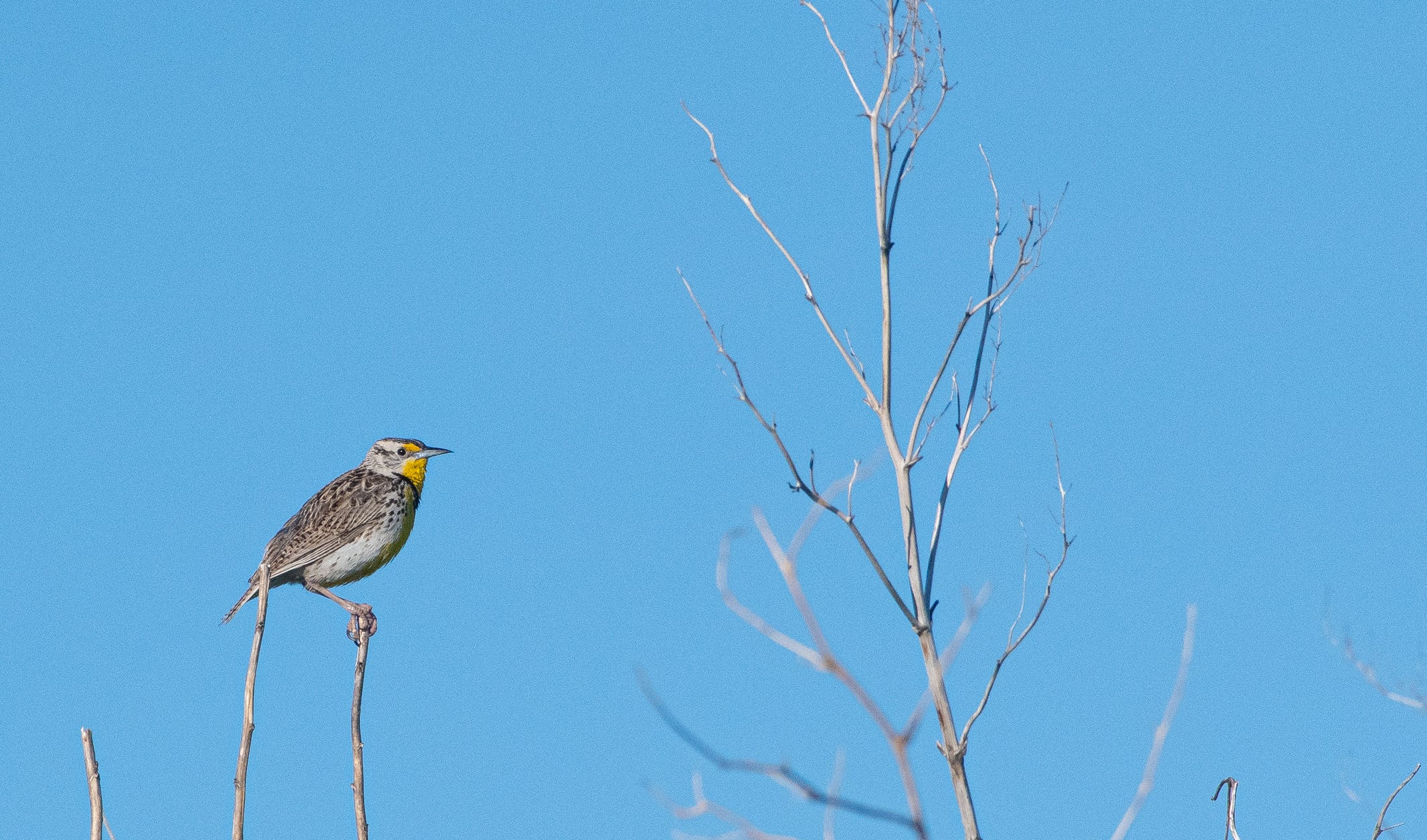
However, if you look at the total number of white tail feathers, this bird clearly seems to have 3 white tail feathers (or may be a half and half on the 3rd one? (3rd from outside). Also, again, the central tail feather doesn’t look dark, doesn’t have thicker bands. So either this bird is a clear WEME that has learned to sing and call WEME songs and calls or this is a hybrid bird.
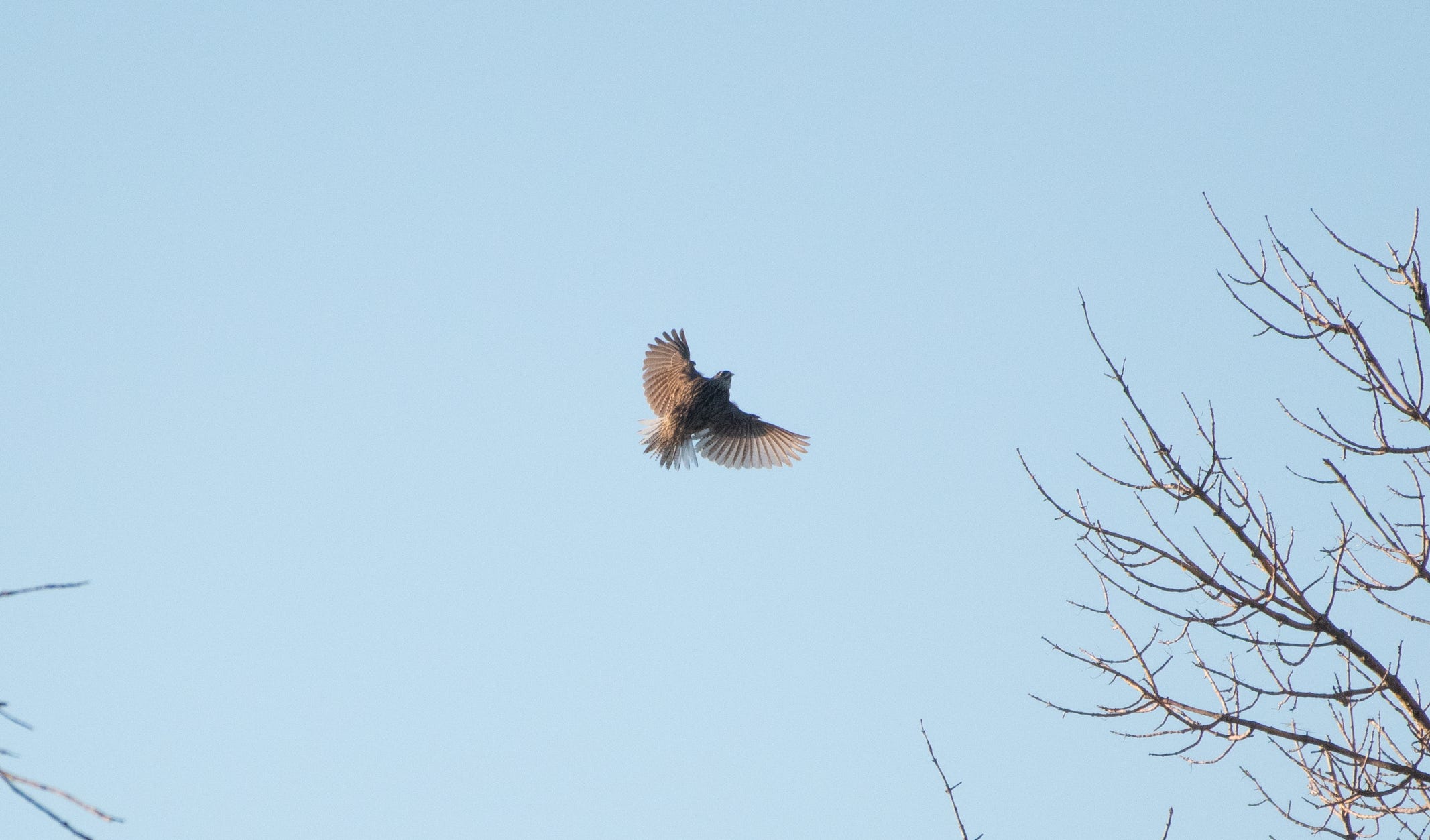
Or what do you all think? Leave your opinion in the comments! And, if you know more field marks or identifying techniques for these two species feel free to share!
Thank you for reading! If you enjoyed this post and would love to support me you can do so at : Buymeacoffee
A really good resources on identifying these two species is the Cornell Lab blog: https://www.birds.cornell.edu/crows/mlarkdiff.htm